Categories
Window Tint and Film

Removing Window Tint Film What Works and What Doesn’t

Removing window tint film from your home windows can be a daunting task, especially if you’re unsure where to start. Over time, window tint can become damaged, faded, or simply out of style, prompting homeowners to seek out effective removal methods. In this comprehensive guide, we will explore what works and what doesn’t when it comes to removing window tint film, ensuring you can restore your windows to their pristine condition.

Before diving into the removal process, it’s essential to understand what window tint film is and why it might need to be removed. Window tint film is a thin, adhesive layer applied to windows to reduce glare, protect against UV rays, and enhance privacy. While it offers many benefits, tint film can degrade over time due to exposure to sunlight, temperature fluctuations, and general wear and tear. For more technical information about window performance and glazing standards, see U.S. Department of Energy’s guide to window attachments.

Why Remove Window Tint?

Homeowners choose to remove window tint for various reasons, including:

  • Aesthetic Changes: Interior design trends evolve, and what was once fashionable may no longer fit your style.
  • Damaged Film: Scratches, bubbles, or peeling can occur, diminishing the appearance and performance of the tint.
  • Faded Tint: Over time, the film may lose its color, reducing its effectiveness and attractiveness.

Effective Methods for Removing Window Tint
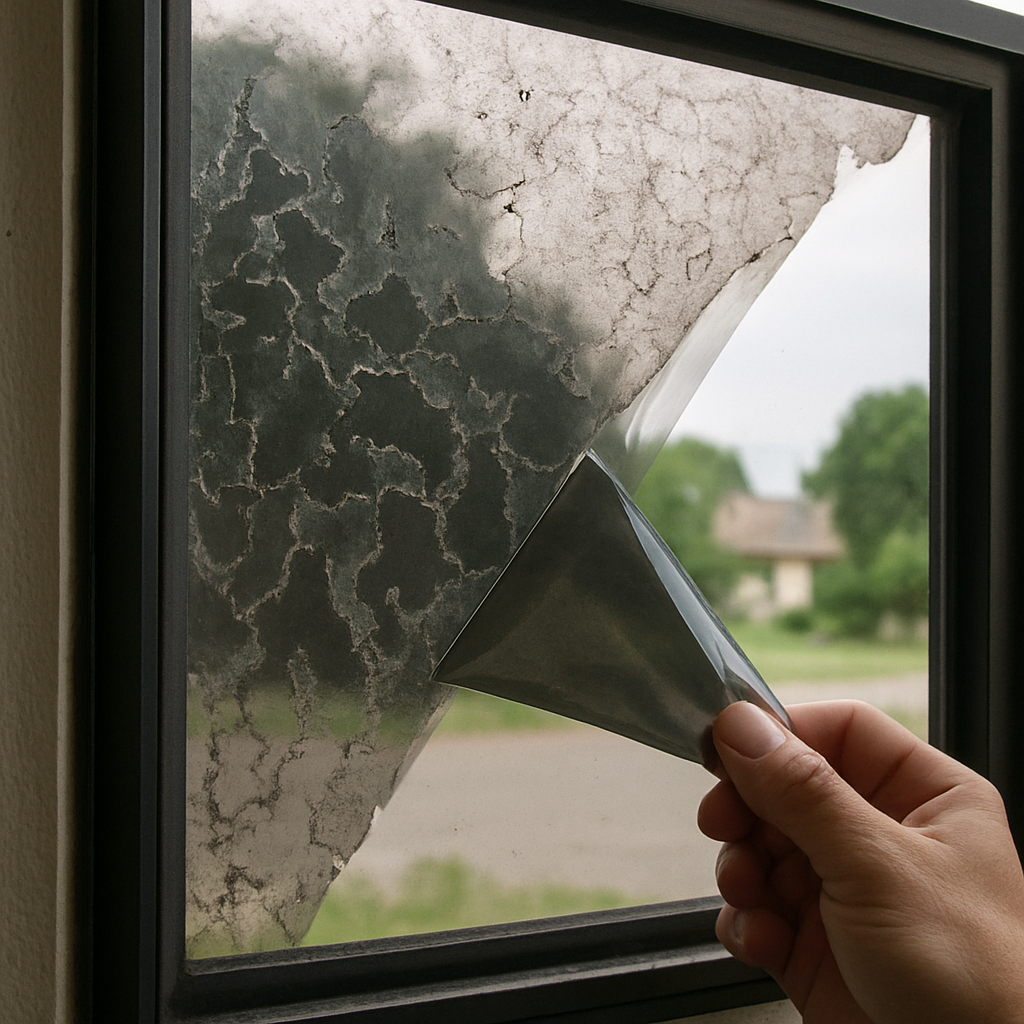
Peeling window tint film

When it comes to removing window tint film, there are several methods you can try. Let’s explore some of the most effective techniques:

Method 1: Soap and Scraper

This method is simple and cost-effective. You will need:

  • A spray bottle filled with soapy water
  • A sharp razor blade or window scraper
  • A clean cloth

Steps:

  1. Spray the soapy water generously over the window tint.
  2. Allow the soapy water to soak for a few minutes to loosen the adhesive.
  3. Carefully use the razor blade or scraper to peel the tint away from the window, starting at a corner.
  4. Use the cloth to wipe away any remaining adhesive residue.

Method 2: Heat Gun or Hair Dryer

Using heat to remove window tint is another effective method. You’ll need:

  • A heat gun or hair dryer
  • A plastic scraper or your fingernail
  • Window cleaner or rubbing alcohol

Steps:

  1. Hold the heat gun or hair dryer a few inches away from the tint and gently heat the area.
  2. Once the adhesive is warm, begin peeling the tint away with the scraper or your fingernail.
  3. Clean any leftover adhesive with window cleaner or rubbing alcohol.

Method 3: Ammonia and Sun Method

This method takes advantage of the sun’s heat to assist in the removal process. You’ll need:

  • Household ammonia
  • Black trash bags
  • A spray bottle
  • Soapy water

Steps:

  1. Cut the trash bag to the size of the window.
  2. Spray ammonia generously on the tint.
  3. Immediately cover the ammonia-sprayed window with the trash bag.
  4. Allow the window to sit in direct sunlight for about an hour.
  5. Remove the bag and peel the tint away, starting at the corners.

Methods to Avoid

While there are several effective ways to remove window tint, there are also methods that are less effective or potentially damaging:

Razor Blades Alone

Using a razor blade without any lubricant can scratch the glass. Always combine with soapy water or another lubricant to protect the window.

Harsh Chemicals

Avoid using harsh chemicals that can damage the glass or surrounding window frames. Stick to mild cleaning agents like ammonia or rubbing alcohol. For safety guidance when using household chemicals, review recommendations from the CDC cleaning safety resource.

Tips for a Successful Window Tint Removal

  • Be Patient: Rushing the removal process can lead to scratches or residue left behind. Take your time for the best results.
  • Test a Small Area First: Before committing to a method, test it on a small, inconspicuous area to ensure it doesn’t damage the glass or leave marks.
  • Use Proper Tools: Ensure you have all necessary tools before starting. A scraper, heat source, and cleaning agents are essential for effective removal.

Benefits of Professional Window Tint Removal

Professional removing window tint film

by Kenny Eliason (https://unsplash.com/@heyquilia)

While DIY methods can be effective, professional window tint removal services offer several advantages:

  • Expertise: Professionals have experience and knowledge to handle even the toughest removal jobs.
  • Time-Saving: Professionals can complete the task quickly and efficiently, saving you time and effort.
  • Minimized Risk: Professionals use specialized tools and techniques that minimize the risk of damage to your windows.

Conclusion

Removing window tint film is a task that can greatly enhance the appearance and functionality of your home windows. By understanding the different methods available and choosing the right one for your situation, you can ensure a successful removal process. Whether you opt for a DIY approach or hire a professional, the end result should be clear, beautiful windows ready for a new look or simply to enjoy as they are.

Remember, patience and the right tools are your best allies in this endeavor. Happy window tint removing!

Categories
Window Tint and Film

Design Trends Using Heat Reflective Window Film

In the world of interior design, window treatments play a crucial role not only in aesthetics but also in functionality. One of the most innovative solutions gaining traction today is the use of heat reflective window film. This modern approach offers a blend of style, comfort, and energy efficiency, making it a go-to choice for interior designers and homeowners alike.

Heat reflective window film is a thin layer of material applied to glass surfaces. Its primary function is to reflect the sun’s infrared rays, thereby reducing heat gain inside the home. This results in a cooler indoor environment and lower energy costs, as less air conditioning is needed to maintain a comfortable temperature. According to the U.S. Department of Energy, properly selected window films can significantly reduce solar heat gain and improve overall building efficiency.

The Benefits of Heat Reflective Window Film

Energy Efficiency

One of the most significant advantages of heat reflective window film is its ability to improve energy efficiency. By reflecting heat away from the windows, these films help maintain a stable indoor temperature, reducing the need for air conditioning during hot months. This translates to lower energy bills and a smaller carbon footprint, aligning with the growing trend towards sustainable and eco-friendly home solutions. For a deeper understanding of performance and selection criteria, you can explore this guide on heat-blocking window films.

Enhanced Comfort

Relaxed living room with large windows

With heat reflective window film, homeowners can enjoy a more comfortable living environment. The film reduces glare from the sun, making it easier to watch TV, work on a computer, or simply relax without the discomfort of harsh sunlight. Moreover, it blocks up to 99% of harmful UV rays, protecting furniture, flooring, and artwork from fading. The U.S. Environmental Protection Agency (EPA) also highlights the importance of UV protection in reducing long-term exposure risks indoors.

Privacy and Security

Heat reflective films can also add a layer of privacy to your home. They come in various tints and reflective properties, allowing you to choose the level of privacy that suits your needs. Additionally, these films can enhance security by holding shattered glass together in the event of a breakage, reducing the risk of injury.

Design Trends in Heat Reflective Window Film

Minimalist Aesthetics

The minimalist trend continues to dominate interior design, and heat reflective window films are no exception. Available in sleek, subtle finishes, these films can enhance the clean lines and simplicity characteristic of minimalist spaces. They allow natural light to filter through without overwhelming the room, maintaining an airy and open feel.

Nature-Inspired Designs

As more people seek to bring elements of nature into their homes, window films featuring nature-inspired patterns are becoming popular. These films can mimic the look of etched glass, with designs like leaves, branches, or waves, adding a touch of the outdoors to interior spaces.

Smart Technology Integration

Incorporating smart technology into home design is a growing trend. Some heat reflective window films now come with smart capabilities, allowing homeowners to control the amount of light and heat entering their homes via a smartphone app. This level of control adds convenience and modernity to any space.

Customizable Options

For those seeking a unique touch, customizable window films offer endless possibilities. Designers can choose from a range of colors, patterns, and levels of reflectivity to match any décor style. This flexibility allows for personalized design solutions that cater to individual tastes and preferences.

How to Choose the Right Heat Reflective Window Film

Consider the Tint

The tint of the window film affects both its appearance and performance. Darker tints offer more privacy and greater heat rejection, while lighter tints allow more natural light and maintain visibility. Consider the specific needs of each room when selecting the tint.

Check UV Protection

Ensure that the window film provides high UV protection to safeguard your furnishings and interior finishes. A good quality film should block at least 99% of UV rays.

Evaluate Reflectivity

Reflectivity levels determine how much heat and glare the film can reduce. Higher reflectivity is ideal for sun-exposed areas, while lower reflectivity might be suitable for shaded or north-facing windows.

Professional Installation

Professional installing window film

Photo by Mak on Unsplash

For the best results, it’s advisable to have heat reflective window film professionally installed. Experienced installers ensure that the film is applied without bubbles or creases, providing a seamless and long-lasting finish.

Integrating Heat Reflective Films in Interior Design

Living Areas

In living rooms and lounges, heat reflective films can be used to enhance comfort and style. Opt for films with subtle patterns or clear finishes to maintain openness while reducing glare.

Kitchens and Dining Rooms

These spaces benefit from films that allow natural light while minimizing heat gain. Consider films with a slight tint to add a modern touch without sacrificing brightness.

Bedrooms

For privacy and heat control, bedrooms can utilize darker or more reflective films. This ensures a comfortable sleeping environment and protects privacy without the need for heavy drapes.

Home Offices

Reduce eye strain and improve productivity in home offices by applying films that cut glare and control heat. Opt for films with minimal reflectivity to maintain a professional appearance.

Final Thoughts

Heat reflective window films are a versatile and stylish addition to any home. They not only enhance aesthetic appeal but also provide practical benefits such as energy savings, comfort, and privacy. By understanding and embracing the latest design trends in window films, you can create spaces that are both beautiful and functional.

Incorporate heat reflective window films into your next interior design project to offer clients a modern solution that meets their needs and exceeds their expectations. With the right choice, you can transform ordinary windows into extraordinary elements of design.